AI-Native Self-Adaptive Business Digital Twin Ecosystem Platform
OntiCards' ultimate goal — to build a digital twin body that runs itself and closes the loop automatically. Yet our implementation paradigm is the exact opposite of traditional digital twins: an ecosystem evolution paradigm — build the foundation first, then run, grow, and self-adapt in parallel.
AI-Native Four-Layer Architecture · Event-Driven Ecosystem
Data adapters + semantic card layer + Agent ecosystem + skill library — four layers fully decoupled and independently iterable, goal-driven autonomous intelligent execution.
Data Link Adapter(System Sensory Layer)
Unified gateway for all external data and business systems — federated direct connection + auto-ingestion dual-mode strategy.
Zero data movement, real-time transparent query of external systems.
AI auto-detects schemas, auto-builds tables and warehouses.
Structured / unstructured / multimedia handled independently.
Pre-masking, permission interception, full-chain audit.
Data Semantic Layer(Card System)
Enterprise-wide unified data map + semantic dictionary + addressing index — AI drafts first, FDE business-calibrates.
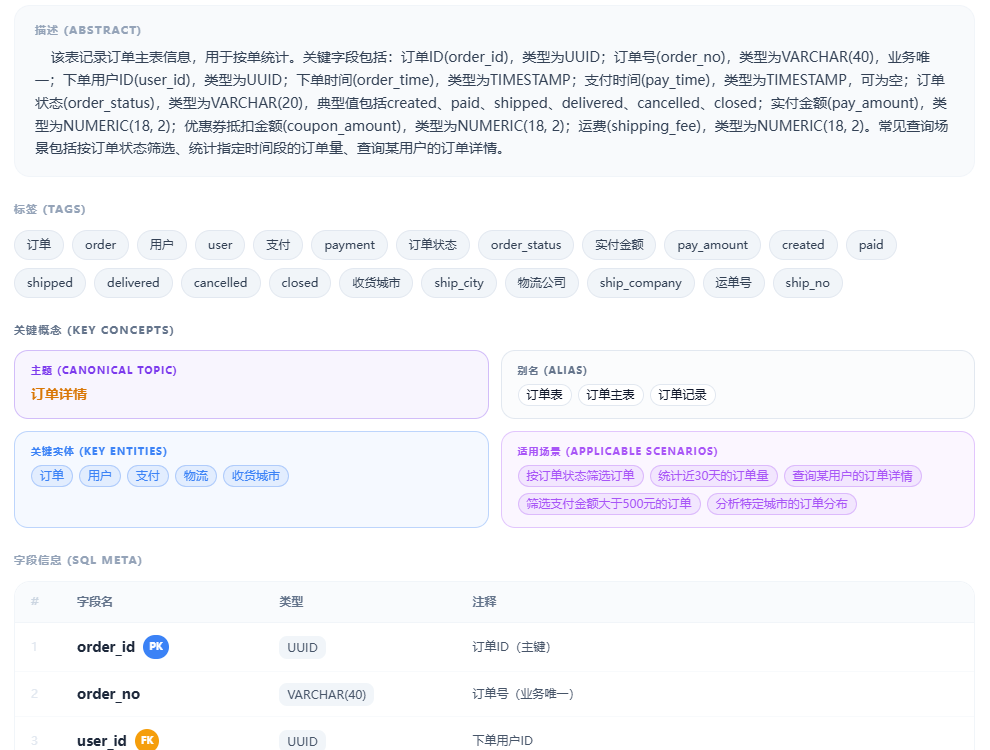
AI-structured specification sheet for data sources (meta / semantics / permission).
Cross-source relationships auto-discovered by AI and calibrated by FDE.
Natural language cross-space cross-source self-service query engine.
Business Agent Ecosystem(System Living Body)
The real business driver and executor — event-triggered wakeup, autonomous planning, no fixed flow, goal-driven.
Management: receive goals, decompose tasks, coordinate.
Execution: order / warehouse / finance / procurement roles.
Evolution: auto-optimize, distill experience, mine processes.
Skill Library(Capability Atom)
All enterprise know-how / SOP / system operations / business experience as reliable, usable atomic capabilities — fully understandable and ready to use.
Query / statistics / analysis / anomaly diagnosis / reporting.
MCP / API integration with external business systems read/write.
Standardized business process packaging (return / approval / procurement).
Industry rules / compliance standards / business experience reasoning.
An AI-Native Paradigm Tailor-Made for the Chinese Market
Built for the reality of domestic government, state-owned, and private enterprises. OntiCards' core mission: replace heavy ontology with an AI-native, lightweight, elastic, evolvable digital twin paradigm that fits the Chinese market.
Blazing-Fast Business Iteration
With new businesses exploding and legacy ones retiring fast, heavy up-front modeling often ends up with "the model isn't built yet, but the business is already obsolete".
Budget & Cost
Domestic customers cannot absorb long-term FDE on-site engagements, high implementation costs, or heavy transformation investments.
Many Fuzzy Scenarios
Vast amounts of non-standardized, fuzzy, flexible business scenarios simply cannot be fully codified into rules.
Layers Fully Decoupled, Independently Iterable
OntiCards' core architecture is composed of four core layers + three cross-cutting systems.
System Sensory Layer
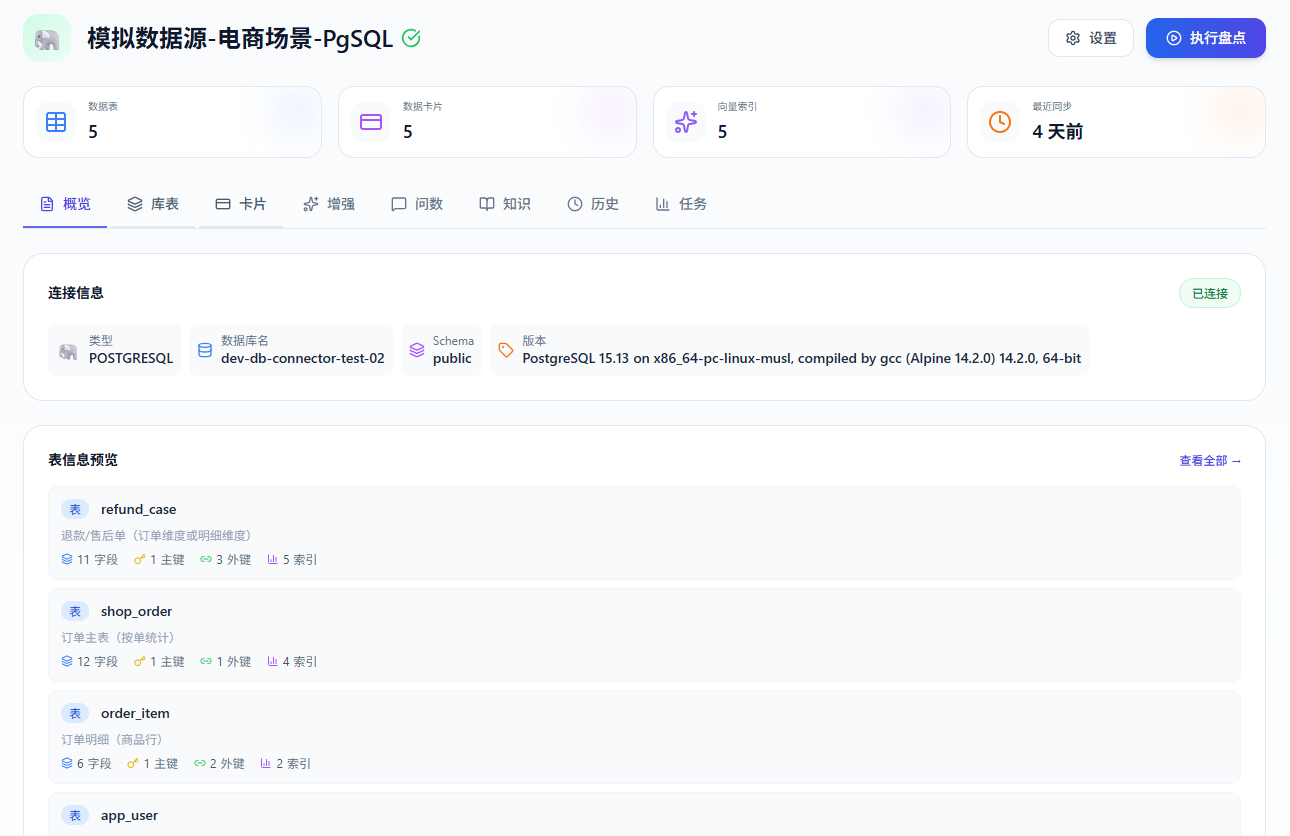
The single gateway and channel for all external data and business systems. Federated direct connect + auto-ingestion dual-mode solves the "how to connect, store, query, and whether to land" compliance and adaptation problems.
Data Card System
Enterprise-wide unified data map + semantic dictionary + addressing index. A Data Card is the AI-structured specification sheet for a single data source / table / document — it records only metadata, never business transactional data.
System Living Body
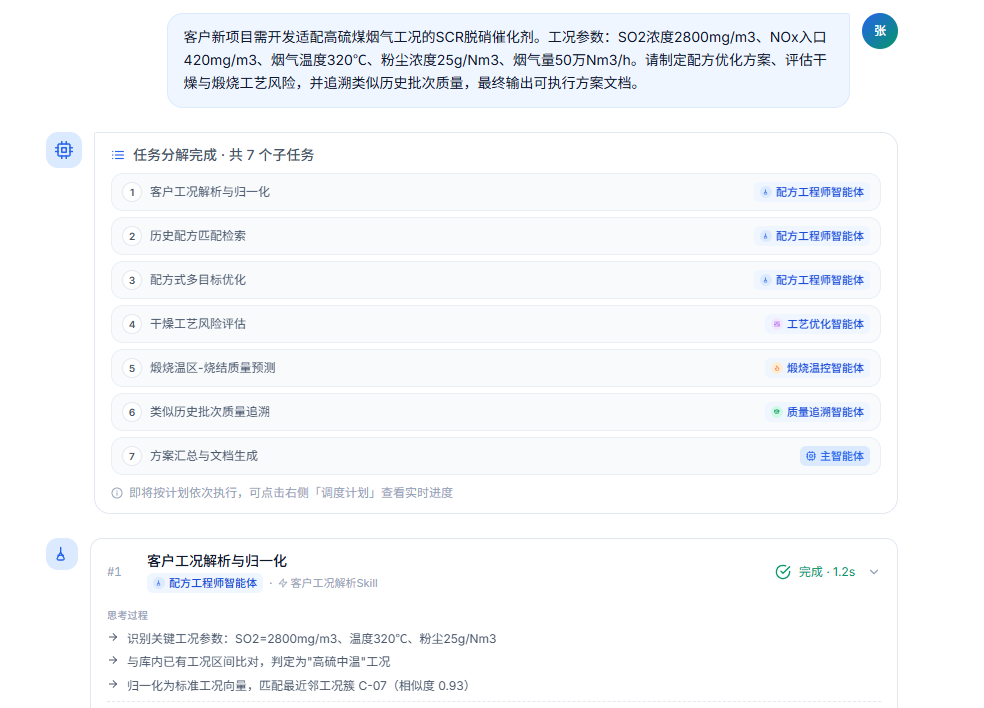
OntiCards' real business driver, executor, and decision-maker. It replaces the traditional fixed business rule layer and is the AI-native digital twin living body. Three-tier ecosystem: Master Agent, Domain Business Agents, Ops & Governance Agents.
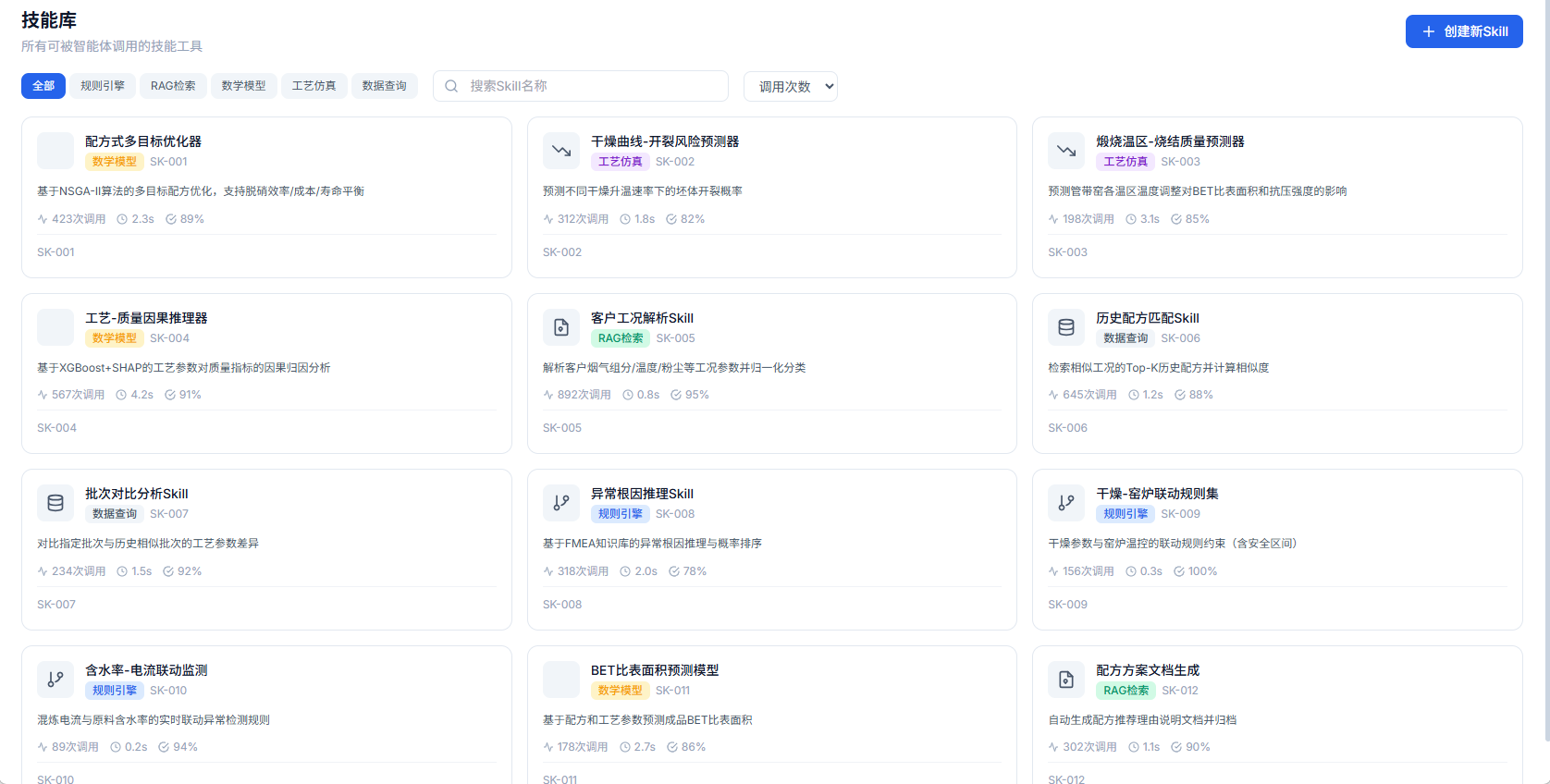
Capability Atom Library
The reusable atomic capability library for all "how-to" — methods / SOPs / system operations / business experience and Know-How. Fully decoupled, globally reusable, never bound to any data model.
Three Cross-Cutting Systems
Global Security & Permission
Three-layer permission chain: data card access, agent role, skill execution. Least-privilege, full-chain audit, full-behavior tracing, mandatory approval for high-risk operations.
Global Event-Driven Bus
The system's single trigger center. Standard main path: external business systems actively push business events (priority). Fallback: CDC change-data-capture wraps events (legacy system compatible).
Self-Evolving Governance
Smarter with use: automated card semantic optimization, auto-refined relations, auto-distilled execution experience, auto-mined new skills from frequent flows.
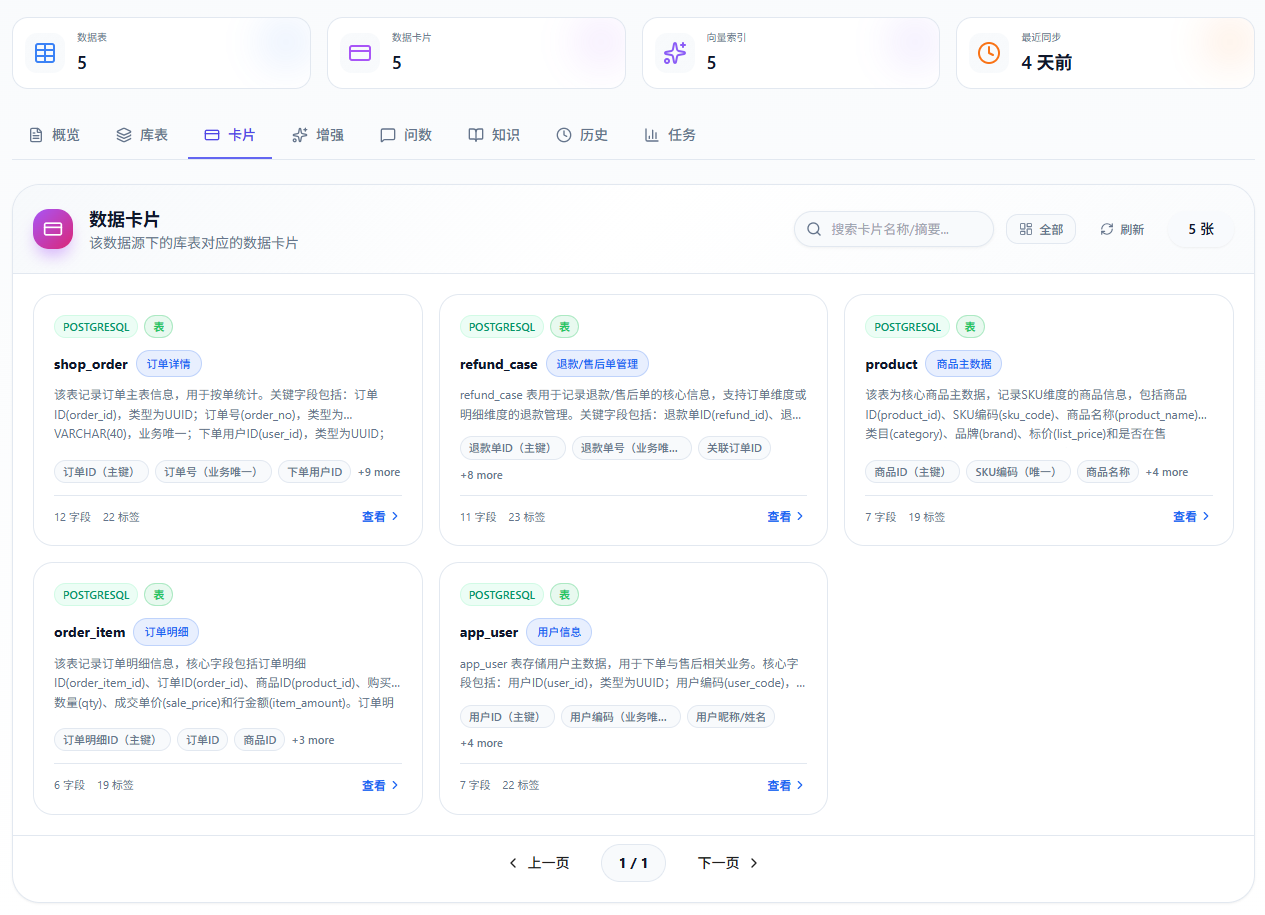
Data Cards — Agents' Data Dictionary + Map + Navigator
The data semantic layer is not a memory layer, does not store business data, and does not refresh on every business record change. It is the agent's addressing system — wherever the agent doesn't know where data lives, how to read it, what it means, or who it relates to, the data card covers it all.
Data Card Standard Content
- Source Basic Info:Owning data space, source system, update frequency, data volume
- Field Semantic Spec:Business meaning, enums, ranges, calibers, definitions of each field
- Data Quality Tags:Completeness, accuracy, anomaly signatures
- Permission & Masking:Who can read, who can query, which fields are masked
- Scenario Tags:Which business scenarios this data applies to
- Address & Query Rules:How to query, which sources it links, NL2SQL parsing rules
Key Characteristics
- Cards Stay Stable:Single order add / change does not alter the card
- AI drafts, FDE calibrates
- Cards iterate only when the source structure changes
- Unified semantics across the platform, solves enterprise caliber chaos
- Relation Cards:Cross-source relationships auto-discovered by AI and calibrated by FDE
- NL2SQL Federated Engine:Cross-space self-service query powered by card understanding
Data cards are the agent's "data dictionary + map + navigator". Real business data is the "external resource" the agent pulls on demand.
—— The Core Positioning of Data Cards
Three-Tier Agent Architecture — Mirrors Enterprise Org Structure
Agents are OntiCards' real business driver, executor, and decision-maker. No fixed workflow, no hard-coded rule chain — fully goal-driven and autonomously intelligent.
Master Dispatch Agent
Receives high-level business goals and external events. Autonomously decomposes complex tasks, orchestrates multi-domain agents. Conflict arbitration, exception fallback, global progress control.
Domain Business Agent
Maps to real enterprise roles — order agent, warehouse agent, finance agent, customer agent, procurement agent. Each domain agent has three rigid boundaries: data, capability, business.
Ops & Governance Agent
Runs 7×24 in the background — automated data card semantics, agent execution review, frequent-flow mining, new-skill recommendation, permission risk monitoring.
Event-trigger wake → receive event → understand goal → plan path → need data → consult card → on-demand fetch → need execution → call authorized skill → execute → distill memory → wait for next event.
—— Agent Runtime Paradigm
Enterprise Capability Atom Library
Fully decoupled, locally reusable, never bound to any data model. New business, new operations — no model change, no process change. Just onboard a new skill.
Data Skills
Query, statistics, analysis, anomaly diagnosis, report generation.
System Operation Skills
MCP / API read-write with external ERP / WMS / CRM / order systems.
Process SOP Skills
Standardized business process packaging — return, approval, procurement, reconciliation.
Knowledge Reasoning Skills
Industry rules, compliance standards, business experience reasoning.
Every Skill carries a standardized AI-understandable structure: natural-language capability description, input/output params, invocation protocol (MCP / API / SQL), permission level, risk level, exception handling, retry strategy, failure fallback.
—— Skill Standard Packaging Format
Event-First, Data-Change Fallback
The entire OntiCards operation uses events as its single wake-up source. Using an e-commerce order payment flow as an example — see the standard event-driven closed loop.
Real User Action in Business System
A user places an order and completes payment. The e-commerce system pushes a standardized event onto the OntiCards event bus: order-payment-completed.
Key: not database listening, not data-increment change!
Event Bus Wakes Master Dispatch Agent
The Master Dispatch Agent receives the business goal: complete the full-order automated fulfillment loop.
Master Agent Autonomous Decompose & Dispatch
Auto-wakes: order-execution agent, warehouse-management agent, finance-accounting agent.
Each Agent Fetches On-Demand via Data Cards
Take the warehouse agent: it consults the order data card to learn where data lives, query syntax, field meaning; it consults the inventory data card for source, caliber, warehouse linkage; via NL2SQL it pulls the latest business data on demand. Cards themselves do not change, grow, or refresh — they only "point, translate, explain".
Agent Autonomous Decide + Skill Execution
Stock sufficient: invoke [WMS create-outbound-order skill] to issue warehouse instructions. Stock insufficient: invoke [procurement-request skill] to auto-trigger replenishment and mark the order as back-ordered.
Multi-Agent Parallel Business Execution
Order agent: invokes skill to update order status. Finance agent: pulls order amount and merchant info, invokes skill to generate accounting vouchers and complete revenue booking.
Result Feedback, Memory Distill, Full Sleep
WMS / ERP return results. The agents record execution context, process paths, anomalies into long-term memory. The flow sleeps, waiting for the next business event.
Fallback compatibility: if a business system cannot push events, the adapter's CDC captures data changes, wraps them into standardized business events on the bus. Architecture logic stays — still "event wakes agent, agent drives execution".
—— Compatibility for Legacy Event-Incapable Systems