Multi-Agent E-commerce Market Analysis: Automating Market Reports
An intelligent multi-agent system (MAS) delivers big-data market insights: multiple AI agents work together to automate cross-platform data collection, analysis and market report generation, then link those insights into product description and listing strategy adjustments — making data-driven decisions routine.
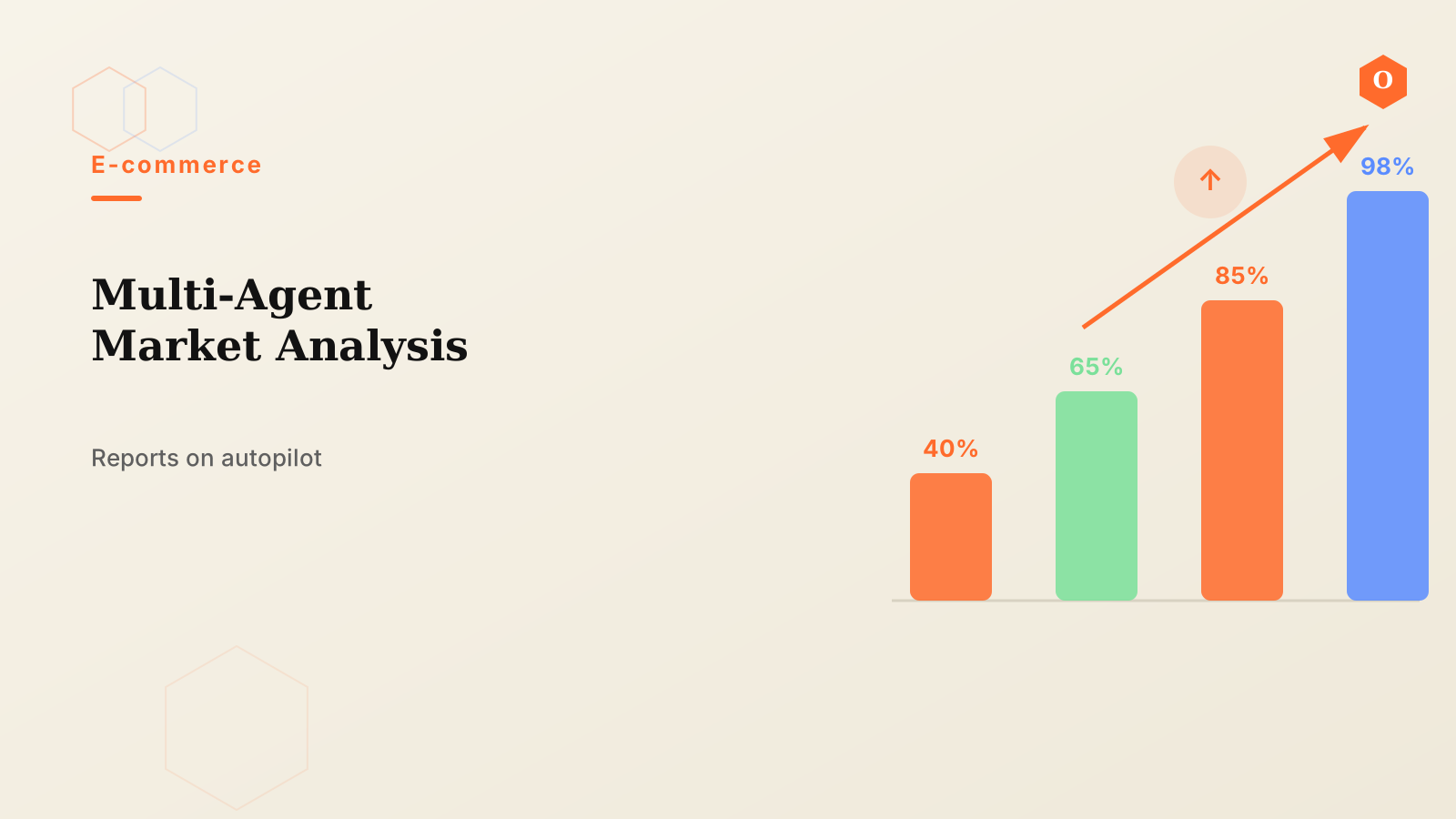
A cross-border e-commerce company runs its business across multiple sales platforms and target markets. For the operations team, every morning begins with the same question: which market is rising today, which category is heating up, what are competitors doing? In the past, answering meant manually logging into several platforms, exporting spreadsheets and stitching them into an analysis. Today, an intelligent multi-agent system (MAS) does all of it — from cross-platform data collection to market report generation, fully automated, with reports that update themselves.
Background and pain points
Cross-border e-commerce market analysis is, at its core, an information race against time:
- Data is scattered across platforms. Sales platforms, ad backends and competitor pages each keep their own silos of data. Manual collection is slow, laborious and prone to missing critical signals.
- Markets move fast; decision windows are short. Product popularity, price shifts and competitor moves can change on a daily — even hourly — basis. By the time analysis is done by hand, the opportunity is often gone.
- Analysis depends on individual experience. Whoever reads the data first moves first. But analytical capability is concentrated in a few senior operators, so the whole team's decision speed is capped by individuals.
- Reports and execution are disconnected. Even after producing an analysis, turning it into product description changes, tag optimization and listing strategy updates requires another round of human judgment.
In one sentence: cross-border e-commerce doesn't lack data — it lacks the automation that turns data into action.
What we did
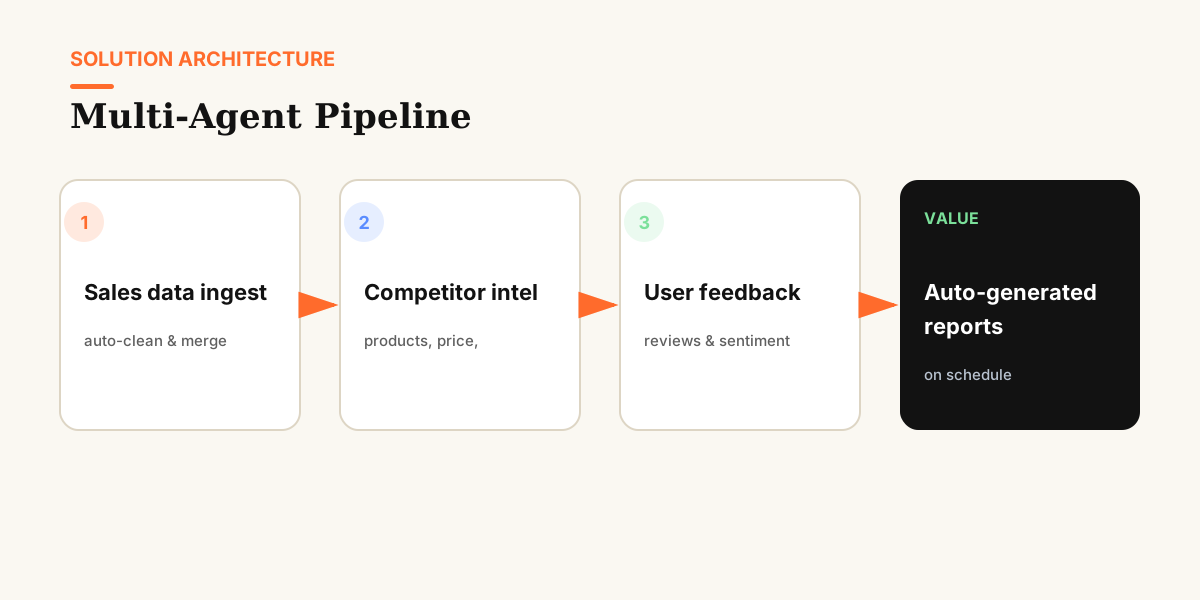
The core of the project was building an intelligent multi-agent system in which multiple AI agents collaborate to close the loop from front-end collection to back-end execution:
- Automated cross-platform data collection and analysis. Different agents take ownership of different data sources — sales data, competitor activity, advertising spend, customer feedback — collecting, cleaning and consolidating on a unified cadence, replacing the tedious process of logging into each platform by hand.
- Combining NLP, image recognition and machine learning. The system uses natural language processing to understand product descriptions and customer reviews, image recognition to analyze competitor product images and detail-page changes, and machine learning to capture patterns linking sales, pricing and traffic — delivering real-time market intelligence.
- Automated market report generation. Once the data is analyzed, the system produces structured market reports — which market, which category, what trend, what recommended action — written for decisions, not as a spreadsheet dump.
- Linked adjustments to products and listings. The report doesn't just sit there to be read. The system generates recommendations for product descriptions and tags, and optimizes display strategies — turning analytical conclusions into an executable action list that helps the team make data-driven decisions quickly.
Results
After launch, market analysis moved from "periodic manual work" to "an automation capability that never sleeps":
- From "hours of data collection" to "real-time market insight." Automated collection and analysis across platforms frees the operations team from manual exports and stitching. Market changes enter the picture with far less latency, and response times improve noticeably.
- From "judging by experience" to "decisions with a basis." Auto-generated reports shift decisions from personal experience to unified data insight; the team's analytical capability no longer depends on a few individuals.
- From "disconnected reports" to "analysis as action." Recommendations for descriptions, tags and listing strategy come directly from the system. Operational moves and market insight close the loop under one logic, and execution becomes markedly more efficient.
- E-commerce operations become smarter and more agile. The collaboration of multiple agents in the MAS guarantees responsive market reaction, letting the company adapt faster to change and strengthening its competitive position.
For this company, the system's real value is turning "analysis" from a labor-intensive task into an always-on, continuously evolving team capability.
Lessons learned: from project to OntiCards
The central lesson of this project: the value of a multi-agent system depends on what each agent can actually "understand." Agents can collaborate efficiently, but if the underlying data lacks unified business semantics — the same metric called different names on different platforms, the same product category mismatched across tag systems — then no matter how fast they collaborate, the conclusions can be wrong.
That experience directly shaped how OntiCards works. The data collected by multiple agents ultimately lands on a unified data card system — data cards normalize products, markets and metrics across platforms into consistent entities and definitions, so agents collaborate on the same semantics and their conclusions align. Auto-generated reports and recommendations map to what the Q&A engine and terminology bank enforce for consistent intent understanding and definition alignment. And the "analysis as action" loop maps to the quality gates in data cards that guarantee trustworthy data and traceable conclusions.
If you're planning a multi-agent or agentified business system, think about one thing first: are your agents speaking the same language? Semantic alignment is what makes collaboration worthwhile.