From Blueprints to Data: Intelligent Extraction of Production Parameters for PCB Orders
A PCB manufacturer in the Yangtze River Delta automatically extracts electrical parameters and dimension annotations scattered across customer blueprints into structured data using OCR, NLP, and multimodal AI models — 'blueprints in, data out' — dramatically improving the speed and accuracy of drawing data processing, reducing manual dependence, and giving production and business decisions a precise data foundation.
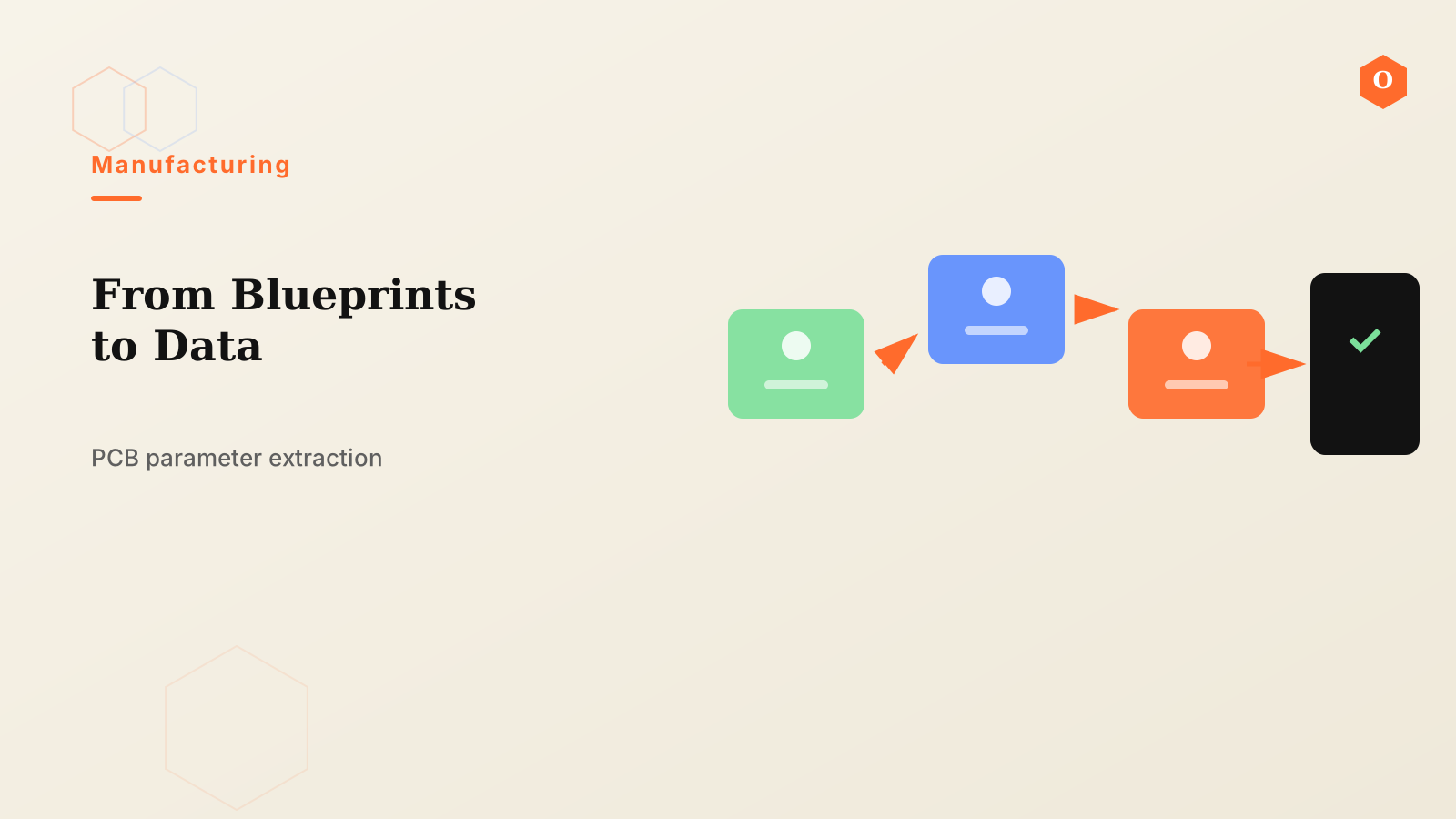
A PCB manufacturer in the Yangtze River Delta faces a steady stream of customer blueprints every day. The drawings contain electrical parameters, dimension annotations, and a large amount of industry terminology — together they decide how an order is scheduled and processed. In the past, engineers interpreted each drawing manually and keyed data in by hand; today, a solution integrating OCR, NLP, and multimodal AI models is turning "blueprints" directly into "data."
Background and Pain Points
Half the complexity of PCB manufacturing lies in process engineering; the other half lies in data management. Customer drawings come in varied formats with a host of elements: board thickness, layer count, material, trace width and spacing, solder-mask openings, surface finish, and more. These parameters are scattered across different regions of a drawing — as text annotations, dimension lines, symbols, or even graphics. There is a common saying in the industry: interpreting drawings is the first gate on the path "from order intake to production," and it is also the most error-prone step. Industry practice shows that manually interpreting a complex customer document can take hours, with data then keyed into databases by hand — one misread or mistyped value can cause batch-level scrap.
This company's situation was especially typical. Order types were many, batch sizes small, and product changeovers frequent, so drawing interpretation was a heavy, constant workload. Manual interpretation standards depended on individual experience, so definitions were inconsistent. Under fast delivery pressure, the risk of key-parameter entry errors grew further. The company needed not "a more refined manual process" but "an automated ability to turn drawings into structured data."
What We Did
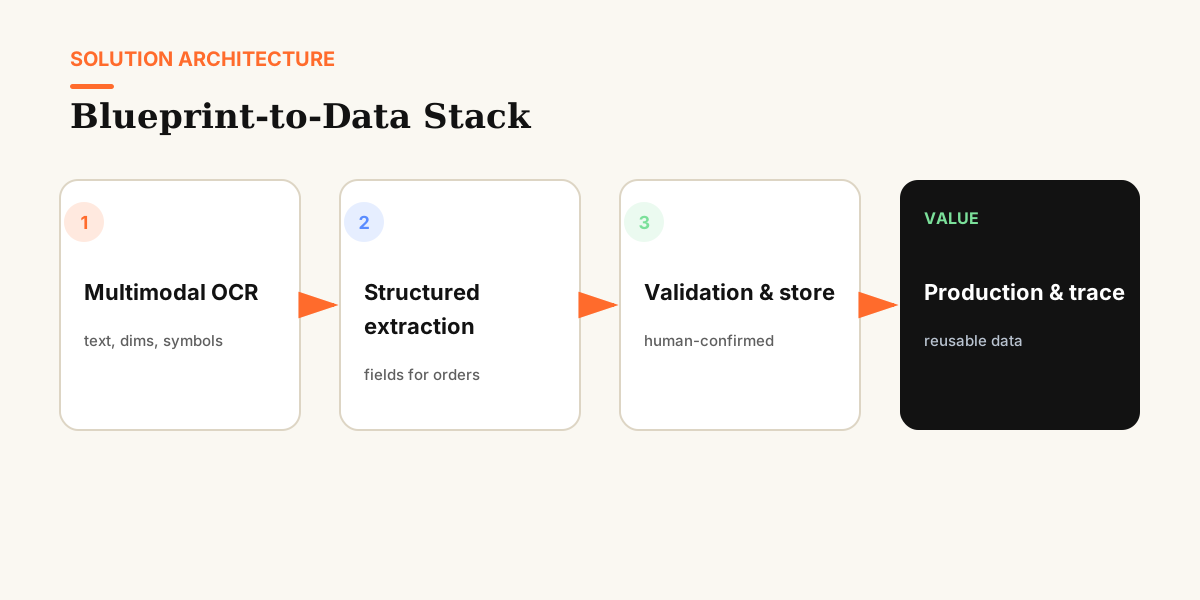
The project's technical route integrated OCR, NLP, and multimodal AI models to achieve automated, high-precision conversion from drawings to structured data. The approach works in three layers.
Layer 1: Multimodal recognition — letting the model "see" the drawing. Customer drawings go through OCR and multimodal parsing, which recognize text, dimension annotations, symbols, and graphical structures together. Unlike text-only extraction, a multimodal model understands both "what the text says" and "what the graphics show," avoiding confusion between annotations and legends, or body text and comments.
Layer 2: Semantic parsing — letting the data "match up." The recognized elements are mapped, through NLP and industry knowledge organization, into normalized business fields — electrical parameters, dimension annotations, material requirements, each in its place. "Board thickness 1.6 mm" in a drawing is no longer an isolated string; it becomes a structured record with semantics that can be stored and validated.
Layer 3: Modular architecture — flexible multi-source data access. The solution uses a modular architecture that can batch-process historical drawings and flexibly connect new orders of different customers and formats. It also interoperates with the company's existing order, process, and scheduling data sources, leaving interfaces open for downstream analysis. The whole solution can be summarized as "blueprints in, data out" — engineers' role shifts from "interpreting drawings" to "reviewing data," improving both accuracy and efficiency.
Results
- Higher efficiency: Drawing data processing is dramatically faster — interpretation that used to take hours is compressed to minutes, and manual data-entry steps drop sharply.
- Lower cost: Dependence on senior engineers for manual interpretation is reduced through automated analysis, easing the "not enough veterans" bottleneck.
- Better decisions: With accurate structured data, production scheduling, process-parameter validation, and business decisions share a consistent data foundation, and cross-stage "data conflicts" visibly decline.
Lessons Learned: From the Project to OntiCards
The core insight of this project: the value of drawing intelligence in manufacturing lies not in "recognizing accurately" but in "data being usable." Recognition is only the first step; the real goal is turning drawing elements into data assets that carry semantics, can be validated, and can participate in scheduling and analysis downstream. That demands both model capability and data-governance capability — and the latter is often the half that gets overlooked.
These lessons have been distilled into OntiCards' solution for advanced manufacturing. The structured data extracted from drawings follows the same philosophy as our data cards: explicitly define the fields and relationships of business objects (orders, materials, process parameters) so the data is used consistently across scheduling, quality inspection, and quotation. Data governance is the underlay of manufacturing digital transformation. Visit the OntiCards website to see how we work with your production data.