A Century of Archives, Reborn Digitally: From Paper Piles to Cross-Modal Search
An AI-driven archive management platform automates the processing of vast historical materials, turning scattered multimedia archives into structured, searchable digital assets — text, images and video now interlink across modalities, keeping a century of organizational history alive and usable.
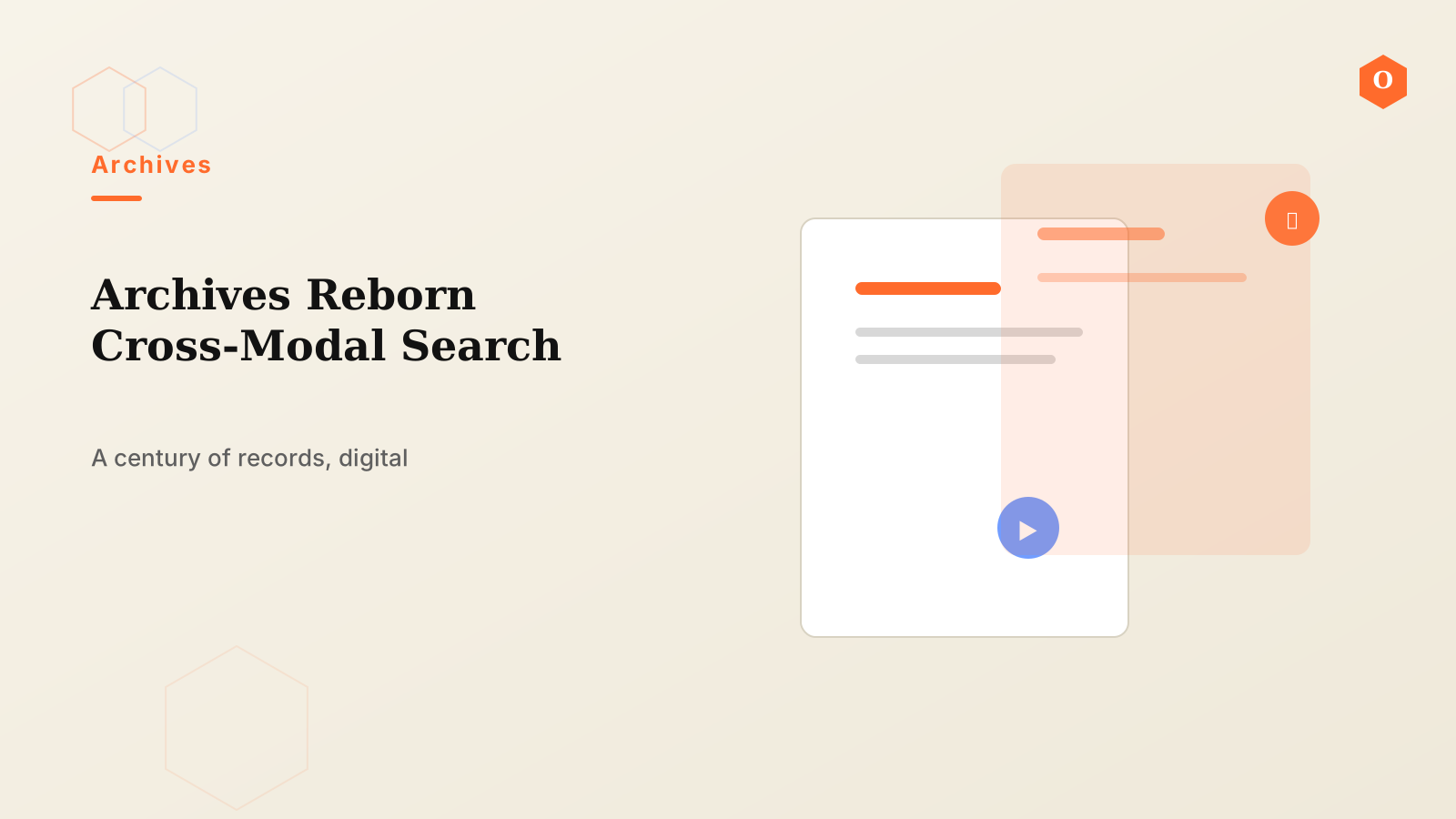
A youth organization with a century of history holds archives that trace the growth and change of several generations: yellowing membership registration forms, magazines bound by year, photographs and footage from countless activities. The material is scattered across different storerooms and different media, and many items exist only in the memories of long-time members. Now, an AI-driven archive management platform is automatically transforming these historical materials into structured, searchable digital assets — letting a single sentence find the exact footage you're looking for across a hundred years.
Background and pain points
For any organization with a century of accumulated material, archives are both an asset and a problem:
- Volume and media variety. Paper documents, photographs, audio and video tapes come in every conceivable form, spanning decades or even a full century. Manual cataloging, item by item, is effectively impossible.
- Scattered and unindexed. Materials sit across different locations with no unified catalogue. Searching means relying on "people who remember" and a bit of luck.
- Content is unreadable. The words on paper, the scenes in photos, the speech in footage all remain in an "unsearchable" state — you know something exists, but you can't find it by what it contains.
- Preservation versus use. The more precious an original, the less willing people are to touch it — and "untouched" means "unknown." The value of history goes unused.
In one sentence: the problem of a century-old archive isn't "no records"; it's that the records can't be searched, understood or reused.
What we did
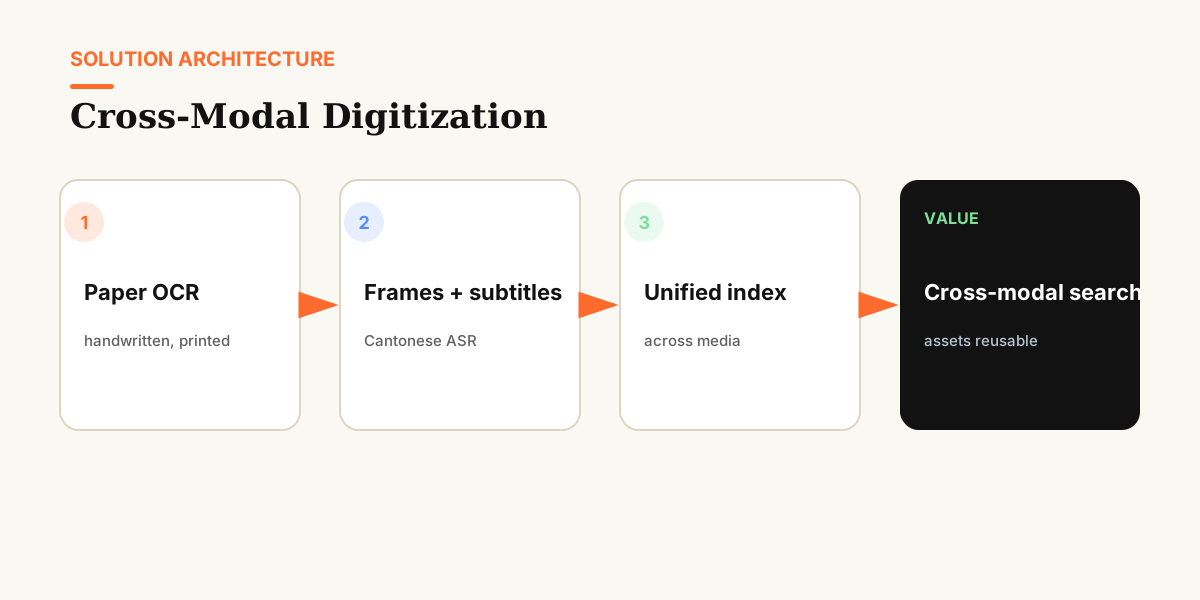
The platform's core goal was to turn "scattered multimedia archives" into "structured, searchable digital assets," so historical content enters a state where it can be queried, combined and reused. Around that goal, the platform provides a full suite of automated processing capabilities:
- Parsing document text. Optical recognition and layout analysis convert handwritten and printed text on paper into searchable content, making "find a name, find a year" possible.
- Extracting video keyframes with Cantonese subtitles. Historical footage is automatically sampled frame by frame, and speech recognition generates subtitles — bringing video content into the text-search universe and filling the gap left by footage with no written record.
- Recognizing image content and tagging semantics. Photos are understood at the content level — scenes, people, activity types — and automatically labeled with semantic tags, so a request like "find a group photo from a 1960s outing" can actually be answered.
- Natural-language query and cross-modal search. Users ask in everyday language; the platform understands intent and returns results across modalities — for example, finding the relevant video clip from a text description. Text finds video; video finds images and documents.
- Permission management for data security. Archives contain personal information and internal organizational material. The platform pairs open retrieval with fine-grained access control so different roles see only what they're allowed to.
Results
The core change after launch is that the "archive" became a "conversational knowledge base":
- Automation replaces manual cataloging. Processing vast amounts of historical material no longer depends on item-by-item human effort. Processing times shrink from a unit of "years" to units of "weeks and months," bringing decades of backlogged, nearly forgotten archives back into view.
- From "search by title" to "search by content." The smallest unit of retrieval goes from "one document" down to "one passage, one scene, one frame." Natural-language querying lets ordinary members without archival training use it directly.
- Cross-modal bridging closes history's gaps. Text records, photographs and footage interlink within a single index. A researcher can jump from a written record directly to the related video clip — historical research shifts from "digging through materials" to "running a search."
- Security and openness, together. Permissions keep "what can be public public, and what needs protection controlled." Digitization doesn't come at the cost of safety.
For this organization, digitization means more than preservation: the archives moved from dormant assets to an organizational memory that a new generation can draw on at any time.
Lessons learned: from project to OntiCards
The biggest insight from this project: if multimodal content can't be unified under one structured description, it can't be searched. Whether text, photo or video, everything has to land in a framework of "entity + relationship + semantic tag" before AI can understand and match across modalities.
That experience directly shaped how OntiCards works. The unified cross-modal index maps to the explicit "entity–field–relationship" modeling in data cards — distilling images, footage and text into consistent descriptions of business objects. Natural-language query and semantic tags map to what the terminology bank and question-answering engine do when they understand and align colloquial expressions. And access control over what content is visible maps to the "access is controlled" governance philosophy baked into data cards and quality gates.
If you're digitizing cultural heritage or historical material, remember this: the end point of digitization is not a scan — it's a searchable, structured asset. When content can be found, understood and reused, history genuinely comes alive.