Special-Needs Rehabilitation Reports: From 3 Days to 30 Minutes
An organization focused on special-needs children's rehabilitation and inclusive education cut its single SEN student rehabilitation-assessment report cycle from 3 days to 30 minutes using a large-model intelligent-analysis module and OntiCards automated data retrieval—while significantly improving terminology accuracy and data-citation precision.
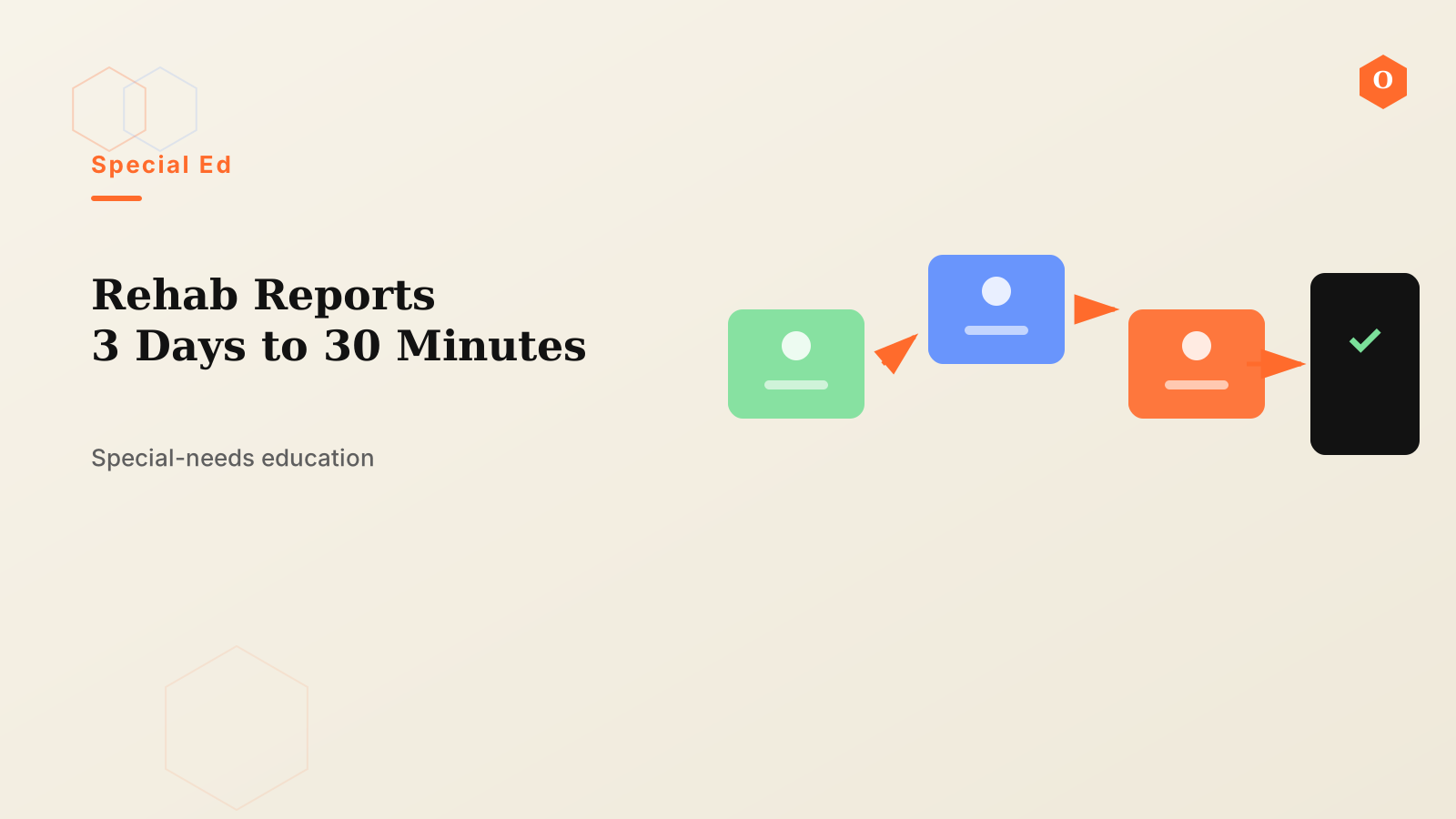
For an organization dedicated to the rehabilitation and inclusive education of children with special needs, every SEN (Special Educational Needs) student's rehabilitation-assessment report is a critical foundation for individualized education programs and intervention planning. These reports must integrate multidimensional assessment data spanning cognition, language, social skills, emotional behavior, and motor development, cross-reference results from prior evaluations, and be composed by professional therapists and educational psychologists. Under the traditional workflow, producing a complete report averaged 3 days: exporting data from front-end business systems, organizing historical assessment records, verifying professional terminology, drafting analytical text, and final review. The process was lengthy, labor-intensive, and highly demanding in terms of staff expertise. By introducing a large-model intelligent-analysis module and connecting the organization's business database to OntiCards for automated data retrieval and report generation, the organization reduced the production cycle for a single report from 3 days to 30 minutes, with simultaneous gains in terminology accuracy and data-citation precision.
Background and Pain Points
The organization's services covered multiple partner schools, and it had already established a central SEN student database serving the entire institution with unified data services. Yet the report-generation stage had long been plagued by three problems:
Report writing was heavily manual, creating a clear production bottleneck. The organization's therapists and assessment staff were limited in number, while the volume of assessment reports required each semester was substantial. During peak periods, assessors worked overtime to finish reports before parent conferences or case-review meetings, leading to high stress and variable output quality.
Unstructured data and professional terminology were hard to handle consistently. Student assessment data included both standardized scale scores and large volumes of unstructured text such as observation records and interview summaries. Reports needed to accurately cite professional terminology (such as "sensory integration dysfunction," "social communication disorder," and "executive function deficits"). Different writers had varying understandings and usage habits regarding these terms, resulting in inconsistent report quality and standards.
Data citations were error-prone and costly to trace. A single report might need to reference multiple assessment results from the past 6–12 months, including outcomes from different evaluation tools. Manual verification frequently led to mistaken dates, copied scores, and internal contradictions. Once a report was submitted and an error discovered, the correction and re-approval process was cumbersome.
What We Did
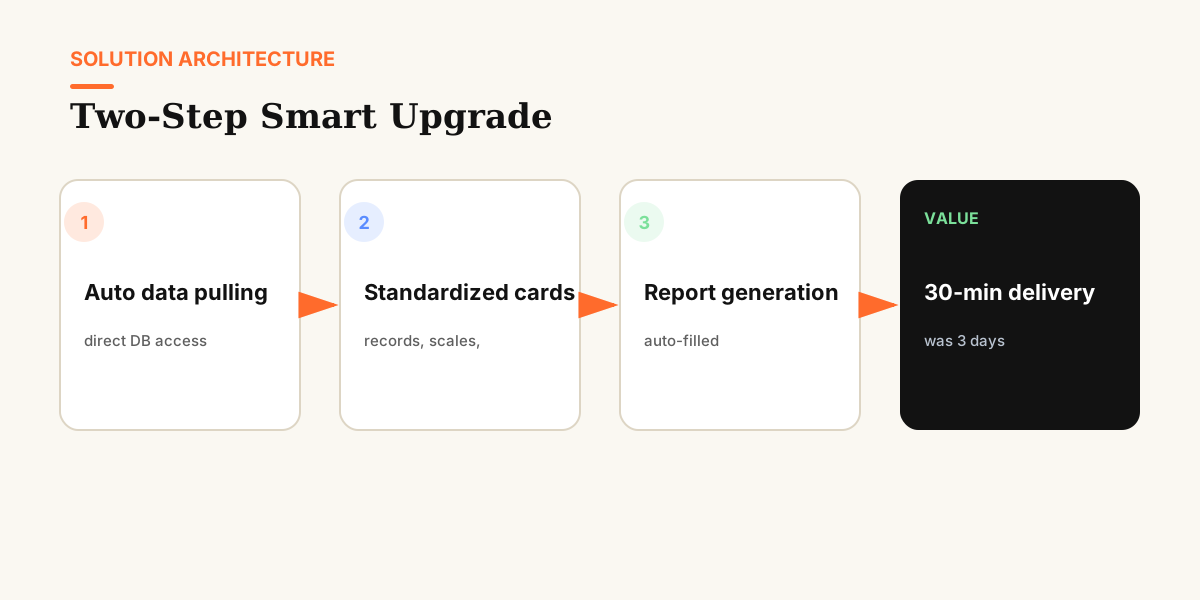
Building on the organization's existing central database, the project team completed the intelligent upgrade in two steps.
Step 1: Connect the business database and use OntiCards for automated data retrieval. Student profiles, assessment records, scale results, and intervention plans were stored in the back-end databases of the organization's business systems. Through OntiCards' data-ingestion layer, the team connected directly to these databases, converting raw data that previously required manual export and organization into standardized data cards. Each card contained a student's basic information, a timeline of past assessments, scale scores, observation-record summaries, and current intervention progress. OntiCards' semantic layer ensured that data from different sources shared consistent field definitions, date formats, and scoring standards, eliminating the format confusion typical of manual preparation.
Step 2: Introduce a large-model intelligent-analysis module to strengthen report quality. With data readiness in place, the team built an intelligent-analysis module tailored to the SEN assessment scenario. The module targeted three core optimization goals:
- Professional terminology accuracy: By embedding a special-education terminology database and diagnostic standards (such as DSM-5-related classifications and local special-education assessment guidelines) into the large model's knowledge constraints, the system ensured that terminology used in reports conformed to industry norms, avoiding colloquial expressions or concept confusion.
- Content output stability: Using an Agent collaborative architecture, the report was divided into fixed sections such as "Background Overview," "Assessment Data Presentation," "Capability Analysis," and "Recommendations and Plan." Each section was generated by a specially optimized Agent, then integrated into a complete report through unified orchestration logic—preventing the structural drift common in free-form generation.
- Data-citation precision: When generating a report, the system automatically retrieved the corresponding student's original assessment records from OntiCards data cards, precisely annotating scale scores, assessment dates, and tool names in footnotes or appendices to ensure every data citation was traceable and verifiable.
After generation, professionals needed only to review the report and add any necessary personalized touches before final submission.
Results on the Ground
The system was deployed and put into practical use within a full assessment cycle, delivering measurable improvements in efficiency, accuracy, and workload:
- Single-report generation time fell from 3 days to 30 minutes. Automated data retrieval and intelligent generation replaced more than 80% of previous manual operations, freeing assessors from spending large amounts of time organizing data and writing first drafts.
- Professional terminology accuracy improved markedly. After the terminology-constraint library went live, internal quality audits showed that the rate of improper terminology use in reports dropped from roughly 12% to below 2%.
- Data-citation error rates fell sharply. Because key data were extracted directly from database cards with automatic source annotation, hard-data errors such as wrong scores or dates in reports effectively reached zero, and rework rates declined noticeably.
- Assessment-team workload eased significantly. According to organizational statistics, after system introduction, the proportion of assessors' time spent on report writing fell from about 40% to under 10%. The reclaimed time was redirected toward high-value activities such as case interviews, parent communication, and intervention-plan design.
Lessons Learned: From Project to OntiCards
This project's experience reinforces a key principle: in vertically specialized fields with high professional barriers, the value of large models is not to replace experts but to free them from repetitive labor. Special-needs rehabilitation assessment spans medicine, psychology, and education; the accuracy of its reports directly affects the scientific validity of intervention plans. Letting a general-purpose large model generate freely can easily produce output that "looks professional but is actually inaccurate."
The combination used in this project—direct database data retrieval, terminology knowledge constraints, and structured Agent generation—was later distilled into OntiCards' "professional-domain report generation" solution. In OntiCards, users can connect their own business databases to the data-card layer, define terminology libraries and quality rules for a specific industry, and have professional Agents generate reports according to preset templates. This model applies not only to special education, but also to medical follow-up, psychological counseling, vocational assessment, and any other scenario with strict demands for professional accuracy and data traceability.
If your organization also faces insufficient report capacity, inconsistent terminology standards, or error-prone data citations, OntiCards' data-card and professional Agent solution may offer a low-cost path to intelligence. Contact us at hello@onticards.com or visit our product page for details.